



South African motorists have welcomed some long-awaited relief at the pumps. From 4 February 2026, fuel prices across the country have been adjusted downwards, easing pressure on household budgets, transport costs, and small businesses that depend heavily on fuel.
This petrol price decrease comes at a time when many South Africans are carefully watching every rand they spend.
We break down how much cheaper petrol is, why prices went down, and what the decrease means for everyday costs, using plain language and a practical, consumer-focused approach.
What Is the Current Petrol Price Decrease?
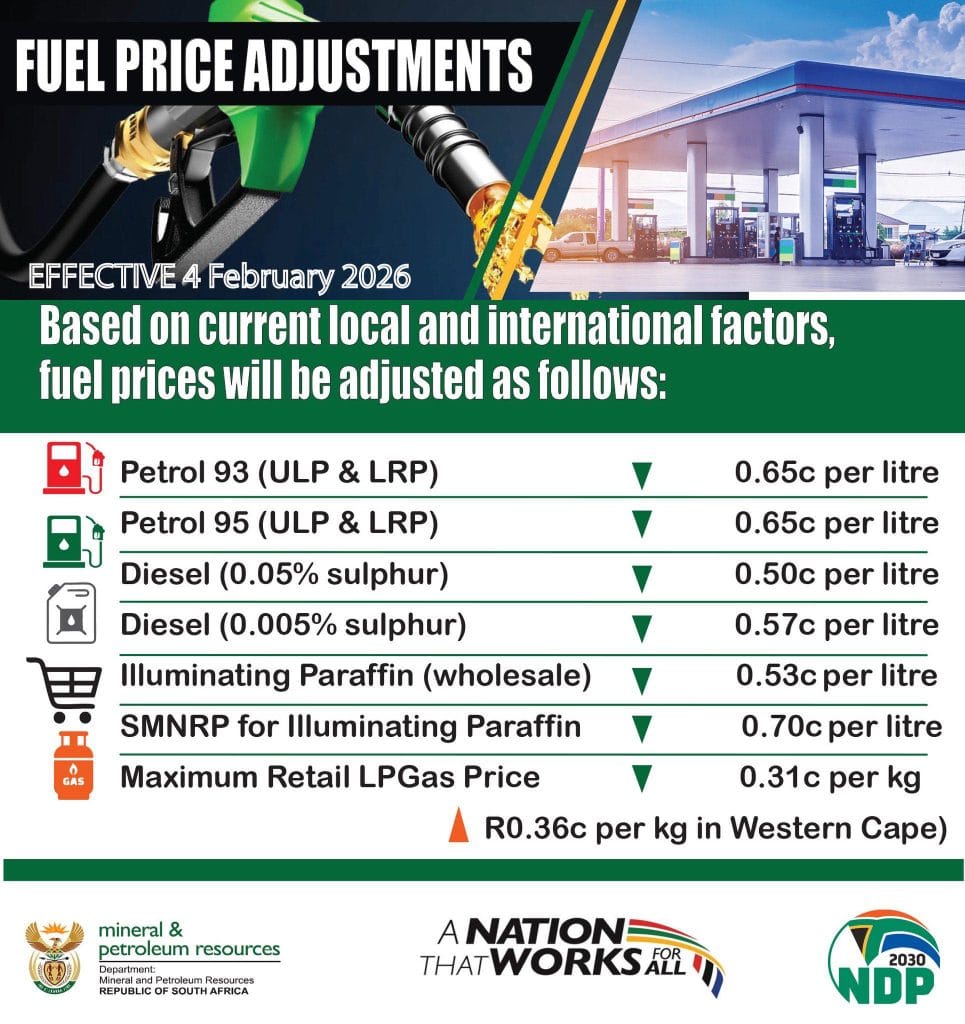
The latest fuel price update confirms a broad-based decrease across petrol, diesel, paraffin, and LPG gas. The adjustments took effect nationwide on 4 February 2026, following the Department of Mineral and Petroleum Resources’ monthly review.
Here is a clear summary of the changes:
- Petrol 93 (ULP & LRP): ↓ 65 cents per litre
- Petrol 95 (ULP & LRP): ↓ 65 cents per litre
- Diesel (0.05% sulphur): ↓ 50 cents per litre
- Diesel (0.005% sulphur): ↓ 57 cents per litre
- Illuminating paraffin (wholesale): ↓ 53 cents per litre
- SMNRP for illuminating paraffin: ↓ 70 cents per litre
- Maximum retail LPGas price: ↓ 31 cents per kg
- Western Cape: ↑ 36 cents per kg (regional adjustment)
For most motorists, the key takeaway is simple: petrol is 65 cents cheaper per litre than last month, offering immediate relief at the pump.
Why Did Petrol Prices Go Down?
Fuel prices in South Africa are reviewed monthly and influenced by a combination of international and local factors. This petrol price decrease in South Africa is mainly the result of three key drivers.
1. Lower International Oil Prices
Global oil prices softened during the review period due to improved supply conditions and weaker demand in some major economies. Since South Africa imports most of its crude oil and refined fuel, changes in international oil prices have a direct impact on what consumers pay locally.
When oil becomes cheaper globally, it reduces the basic fuel price component, which is the largest part of the final pump price.
2. A More Stable Rand
The rand performed slightly better against the US dollar during the review period. Because fuel imports are priced in dollars, a stronger or more stable rand means South Africa pays less for the same fuel.
Even small improvements in the exchange rate can make a noticeable difference, especially when combined with lower oil prices.
3. No Major Levy Increases This Month
Fuel prices also include government levies, taxes, and transport costs. In this cycle, there were no significant increases in fuel levies, allowing consumers to fully benefit from the drop in international prices and exchange rate movements.
How the Decrease Affects Motorists and Commuters
For everyday motorists, the petrol price drop this month translates into real, measurable savings.
If you drive a car with a 50-litre tank, a 65c per litre decrease means:
- R32.50 saved per fill-up
Over a month, especially for commuters who refuel weekly, this can add up to hundreds of rand in savings.
For commuters who rely on private vehicles due to limited public transport options, this reduction helps soften the impact of long travel distances, particularly in Gauteng, Mpumalanga, and other provinces where daily commutes are fuel-intensive.
ALSO READ: Gauteng Load Reduction Schedule for February 2026
Impact on Transport Costs, Food Prices, and Inflation
Taxi Operators and Public Transport
Taxi operators and bus companies are among the biggest fuel consumers. While fare reductions do not usually happen immediately, a fuel price decrease helps prevent further fare hikes.
In many cases, it stabilises transport costs rather than reducing them, which is still good news for commuters already stretched by rising living expenses.
Food and Goods Transport
Fuel is a major input cost in transporting food from farms and warehouses to shops. When diesel prices fall, logistics costs ease, even if only slightly.
While shoppers may not see instant price cuts on supermarket shelves, fuel price decreases help slow down food price inflation, especially for staples transported over long distances.
Inflation Relief
Fuel prices play a role in overall inflation. Lower fuel costs reduce pressure on transport, production, and delivery expenses across the economy. Over time, this contributes to a more stable inflation outlook, which benefits interest rates and household borrowing costs.
What to Expect Next Month: A Short-Term Outlook
Fuel prices are reviewed monthly, and changes can go either way. While this latest petrol price South Africa update is positive, it does not guarantee continued decreases.
Short-term fuel price movements will depend on:
- International oil price trends
- The rand–dollar exchange rate
- Global economic and geopolitical developments
- Local tax and levy decisions
Motorists should enjoy the relief but remain cautious, as fuel prices remain sensitive to global events beyond South Africa’s control.
Tips for Making the Most of the Petrol Price Decrease
While the decrease may not feel dramatic on its own, smart habits can help stretch the savings further:
1. Refill Strategically
If possible, fill up soon after the price decrease takes effect to maximise savings before the next review.
2. Drive More Efficiently
Smooth acceleration, correct tyre pressure, and avoiding unnecessary idling can significantly improve fuel efficiency.
3. Combine Trips
Planning errands together reduces fuel use and saves money over time.
4. Review Your Monthly Budget
Use the savings from lower fuel costs to offset other rising expenses, such as food, school fees, or electricity.
Why This Petrol Price Decrease Matters
This fuel price decrease may seem modest, but in a high-cost environment, every cent counts. For households managing tight budgets, small businesses relying on transport, and commuters travelling long distances, the reduction provides breathing room.
More importantly, it offers temporary relief from cost-of-living pressures and helps stabilise transport and food costs, even if prices do not fall dramatically.
ALSO READ: SCAM ALERT! Gauteng residents, beware of scammers posing as GDHS officials.
The petrol price decrease in February 2026 is welcome news for South Africans across the board. With petrol down by 65 cents per litre, motorists can expect immediate savings, while indirect benefits may be felt across transport and food prices in the weeks ahead.
As always, fuel prices remain unpredictable, but for now, this decrease offers a moment of relief in an otherwise challenging economic climate.