


The Johannesburg Water Crisis has reached a critical point as broken pipes, delayed repairs, and administrative failures leave hundreds of thousands without water. Residents across the city have endured dry taps for weeks. Meanwhile, officials scramble to explain why South Africa’s economic hub is edging closer to “day zero”.
Johannesburg, home to nearly six million people, faces growing public anger. Despite media briefings and a provincial water crisis war room, many communities remain in the dark. The situation has exposed deep structural problems within Joburg Water and the municipality.
Why the Johannesburg Water Crisis Is Getting Worse
The crisis stems from ageing infrastructure, poor maintenance and operational failures. However, recent reports reveal that internal systems have also worsened the situation.
According to Joburg Water’s July–September 2025 quarterly report:
- Only 41.27% of water bursts were repaired within 48 hours. The target was 90%.
- Only 66% of sewer blockages were resolved within 24 hours. The target was 95%.
- Monthly water bursts increased to 4 519, up from 2 960 in 2024.
- Staff overtime costs exceeded budget by R38.2 million.
- Only 421 of 2 675 employees signed performance contracts.
These figures show a utility under strain. Moreover, staff struggled to use a new field services management system. This caused further delays in addressing complaints.
As a result, response times slowed. Communities waited longer for repairs. In some areas, water outages lasted nearly a month.
ALSO READ: March Fuel Price Hike: Petrol and Diesel Set to Rise Again
Residents Speak Out: “You Can Smell Me”
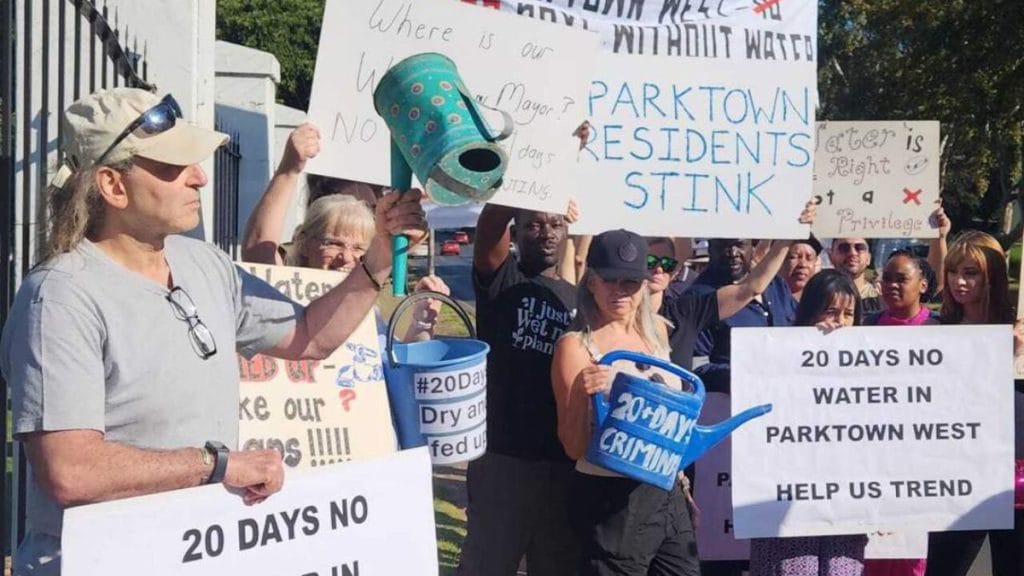
Frustration has spilled into public protests and social media outrage.
In Westdene, 72-year-old Lieza Louw took an unusual step after 25 days without water. She washed her hair in the rain during rush hour. She called it her protest against the ongoing crisis.
In Brixton, an angry resident confronted Mayor Dada Morero.
“You can smell me. I haven’t had water for 24 days,” he said.
These stories reflect the human cost of the Johannesburg Water Crisis. Families struggle to maintain hygiene. Small businesses lose income. Schools and clinics face sanitation challenges.
Political Fallout and Public Backlash
Political leaders have acknowledged the severity of the problem. During his State of the Nation Address, President Cyril Ramaphosa announced that he would take charge of a national water crisis committee.
He later confirmed that national government may intervene under provisions in the Water Act. This intervention aims to prevent municipalities from failing residents.
However, some comments from leaders sparked backlash.
Gauteng Premier Panyaza Lesufi suggested residents shower at hotels. He later apologised after criticism mounted. Similarly, Mayor Morero’s comment that residents should “shower together” triggered widespread ridicule online.
Many residents argued they cannot afford hotel stays. Others said the remarks showed a lack of empathy.
Key Facts About the Johannesburg Water Crisis
- City affected: Johannesburg
- Population impacted: Hundreds of thousands
- Average monthly bursts: 4 519
- Repair rate within 48 hours: 41.27%
- Estimated national infrastructure funding gap: R400 billion
Funding Challenges and Infrastructure Decay
Minister of Water and Sanitation Pemmy Majodina recently stated that South Africa needs about R400 billion to repair and upgrade local water infrastructure. Currently, this funding is unavailable.
She attributed ongoing water shortages to poor municipal maintenance and skills shortages. Without urgent investment, infrastructure will continue to deteriorate.
Furthermore, water throttling measures failed to stabilise supply. Some critics argue the strategy prolonged outages and increased system strain.
Johannesburg’s water network includes ageing pipes, leaking reservoirs and overstretched pumping stations. When repairs lag, the system collapses under pressure.
ALSO READ: Cape Provinces Weather Alert: Heatwave and Fire Danger Warning Issued
Continental Focus on Water Security
The crisis unfolds as President Ramaphosa attends the African Union Summit in Ethiopia. The AU has designated 2026 as the year of water and sanitation.
The summit focuses on sustainable water access and sanitation systems under Agenda 2063. South Africa will participate in the AU AIP Water Investment Summit to address water insecurity.
However, many Johannesburg residents question why local problems persist while continental commitments expand.
What Happens Next?
National government intervention may provide short-term relief. However, long-term solutions require:
- Infrastructure upgrades
- Skilled technical staff
- Transparent performance monitoring
- Improved financial management
- Community communication
Without these reforms, outages will likely continue.
The Johannesburg Water Crisis highlights deeper governance and accountability issues. Residents demand reliable service, not promises.
Frequently Asked Questions (FAQs)
What caused the Johannesburg Water Crisis?
Ageing infrastructure, broken pipes, delayed repairs and operational failures caused the crisis. Budget constraints and skills shortages worsened the problem.
How long have residents been without water?
Some communities have gone without water for up to 25 days. Others experience nightly shutdowns lasting months.
How much funding is needed?
The Department of Water and Sanitation estimates R400 billion is required to upgrade infrastructure nationwide.
A City at a Crossroads
Johannesburg stands at a turning point. The Johannesburg Water Crisis exposes long-standing infrastructure decay and management failures. Yet it also presents an opportunity for reform.
Residents deserve consistent water supply and honest communication. Authorities must now move from apology to action.