


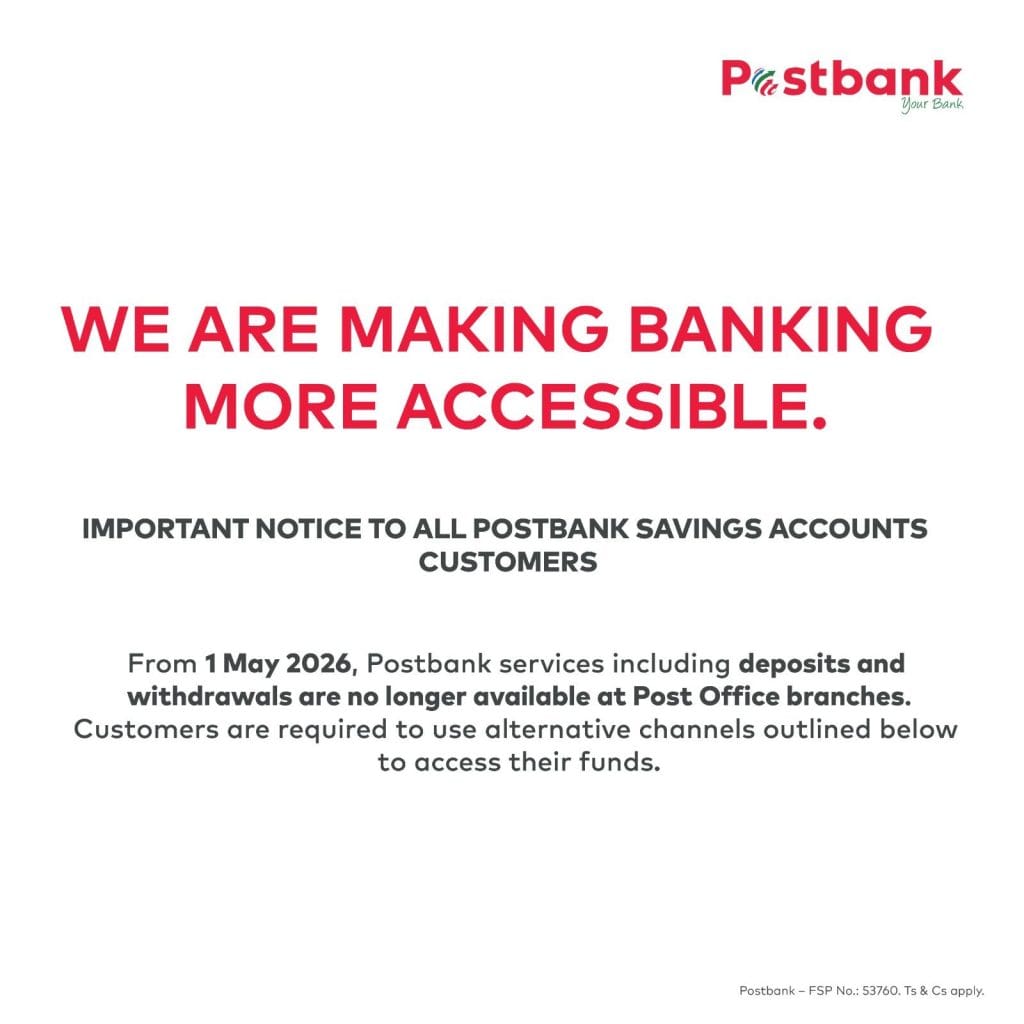
Postbank changes from May 2026 will affect how customers access their money. From 1 May 2026, Postbank services are no longer available at Post Office branches. Customers must now use alternative banking channels for deposits and withdrawals.
This guide explains what is changing, what stays the same, and how to access your funds safely.
What Are the Key Postbank Changes in May 2026?
Postbank is moving away from Post Office branch services. This shift aims to improve access and efficiency.
Important dates to know:
- 1 May 2026:
- Deposits and withdrawals stop at Post Office branches
- 6 May 2026:
- Deposits become available at Standard Bank branches and ATMs
As a result, customers must use new channels to manage their money.
ALSO READ: Prepaid Electricity and Airtime Vouchers Are Changing in South Africa – Here’s What You Need to Know
Where Can You Withdraw Your Money Now?
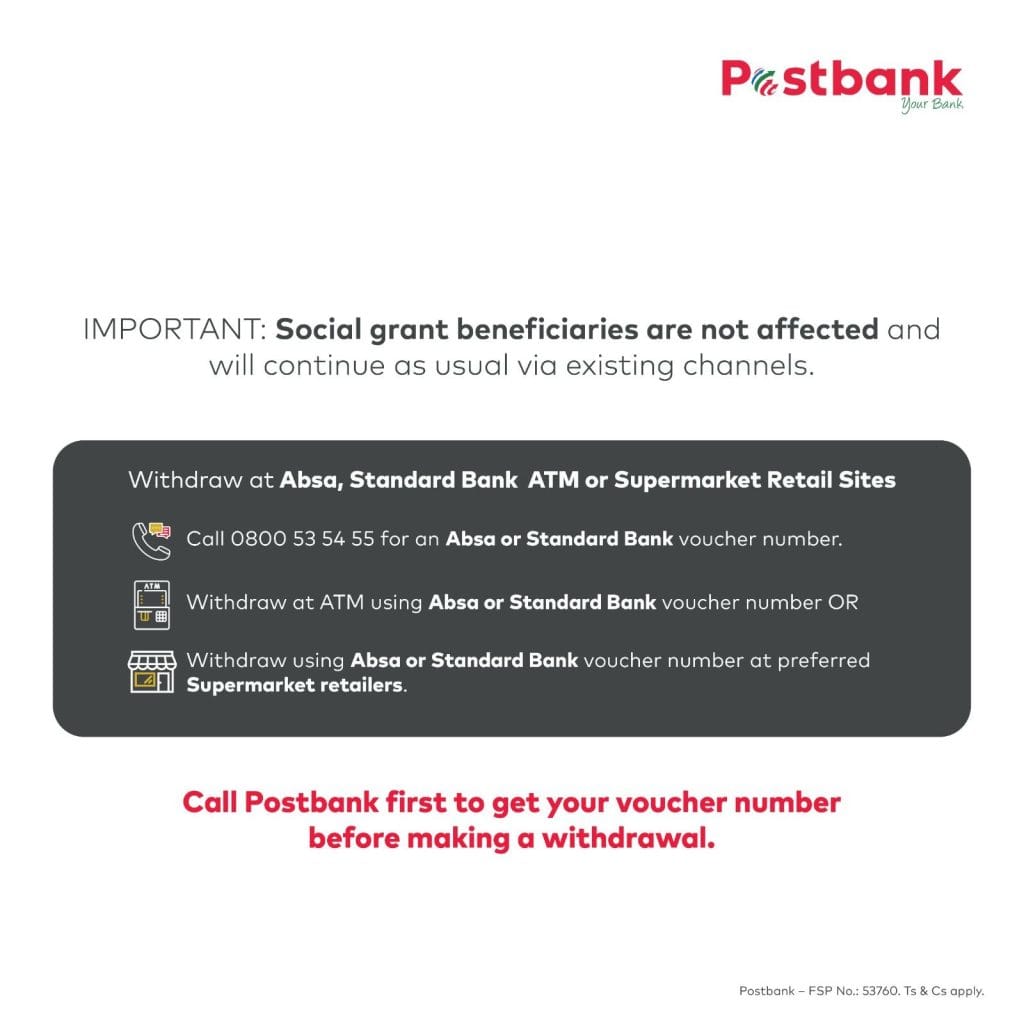
Customers can still withdraw funds using several accessible options.
Available withdrawal methods:
- Absa ATMs
- Standard Bank ATMs
- Supermarket retail stores
However, you must first get a voucher number before withdrawing.
Step-by-step withdrawal process:
- Call Postbank on 0800 53 54 55
- Request your voucher number
- Go to an Absa or Standard Bank ATM, or a retail store
- Enter the voucher number to withdraw cash
This process ensures secure access to your funds.
New Postbank Deposit Options
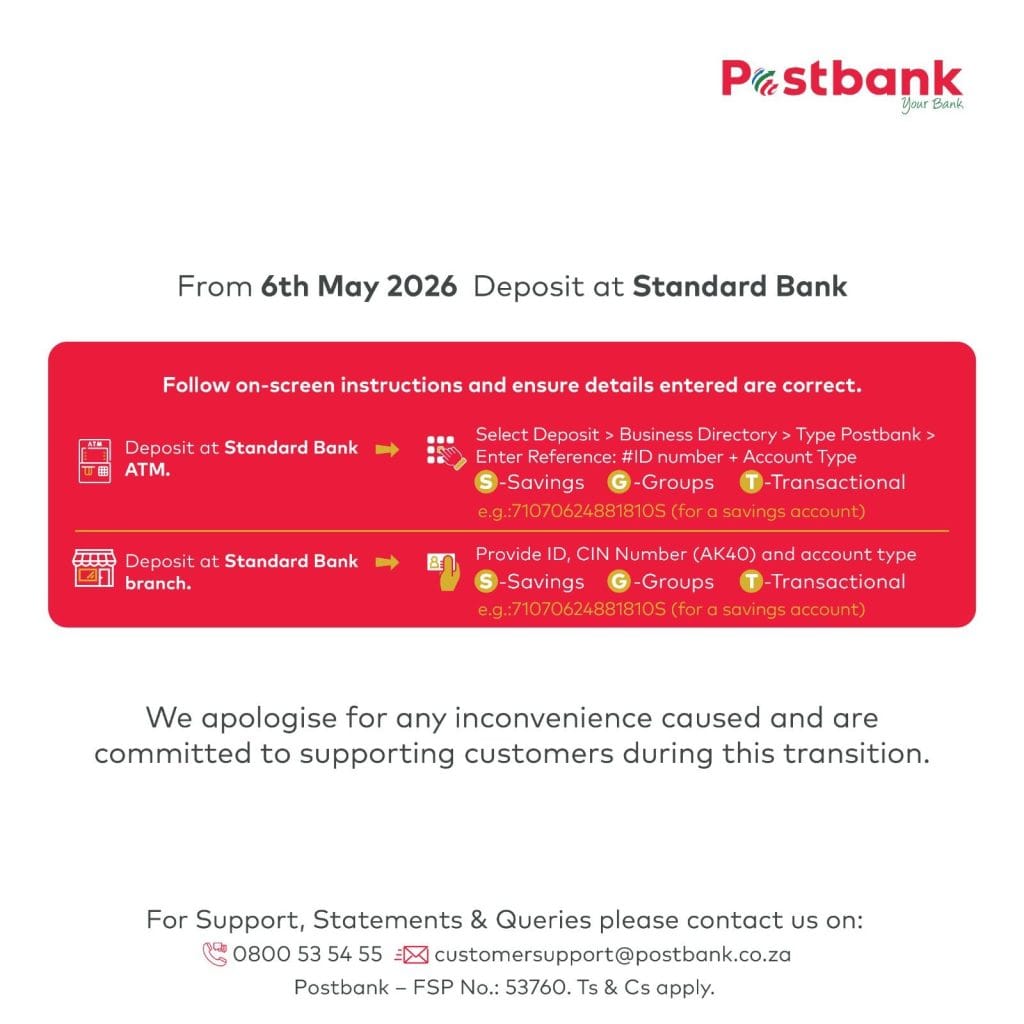
From 6 May 2026, customers can deposit money through Standard Bank.
Deposit channels:
- Standard Bank ATMs
- Standard Bank branches
How to deposit at an ATM:
- Select Deposit
- Choose Business Directory
- Enter Postbank
- Add your reference:
- ID number + account type
- Example: Savings, Group, or Transactional
How to deposit at a branch:
- Provide your ID
- Share your CIN number (AK40)
- Confirm your account type
Ensure all details are correct to avoid delays.
Are Social Grant Beneficiaries Affected?
No, social grant beneficiaries are not affected by these Postbank changes.
- SASSA payments will continue as normal
- You can still use your card at ATMs
- No disruption is expected for grant withdrawals
This reassurance is important, especially for vulnerable groups.
What About Savings Book Customers?
Customers who use savings books must also follow the new system.
- Post Office services are no longer available
- Use ATMs, retail stores, or Standard Bank channels instead
The same withdrawal and deposit steps apply.
Safety Tips During the Transition
As banking methods change, fraud risks may increase. Stay alert and protect your information.
Key safety guidelines:
- Never share your PIN
- Never share your one-time password (OTP)
- Only use official Postbank contact numbers
- Avoid help from strangers at ATMs
- Double-check all transaction details
Postbank will never ask for sensitive information.
ALSO READ: Scholar Transport Safety in Johannesburg: Get Free BESAFE Training Today
Why These Postbank Changes Matter
These changes aim to make banking more accessible across South Africa. Many customers live far from Post Office branches. Therefore, using ATMs and retail partners improves convenience.
In addition:
- More locations are available nationwide
- Transactions become faster
- Customers gain flexible access to funds
Although the transition may feel challenging, the long-term benefits are clear.
FAQs About Postbank Changes
Can I still use the Post Office for Postbank services?
No. From 1 May 2026, Post Office branches no longer offer Postbank services.
Where can I withdraw Postbank money?
You can withdraw at:
Absa ATMs
Standard Bank ATMs
Supermarket retail stores
Do I need a voucher number to withdraw?
Yes. You must call Postbank first to get a voucher number.
Can I deposit money into my Postbank account?
Yes. From 6 May 2026, deposits are available at Standard Bank ATMs and branches.
Are SASSA beneficiaries affected?
No. Social grant payments continue as normal without disruption.
The Postbank changes in May 2026 mark a major shift in how customers access banking services. While Post Office branches are no longer available, several alternative options ensure continued access.
Focus on understanding the new process, follow safety guidelines, and use trusted channels. This approach will help you manage your money without disruption.