


With food prices continuing to rise in South Africa in 2026, millions of families rely on school feeding schemes to ensure children receive at least one proper meal every day. For many learners, the meal served at school is sometimes the only balanced meal they will eat that day.
The NSNP is one of South Africa’s most important — but least understood — education support programmes.
Here’s how to check whether your child’s school should be receiving free meals in 2026, what learners are supposed to get, and what parents can do when problems arise.
What Are Feeding Schemes?
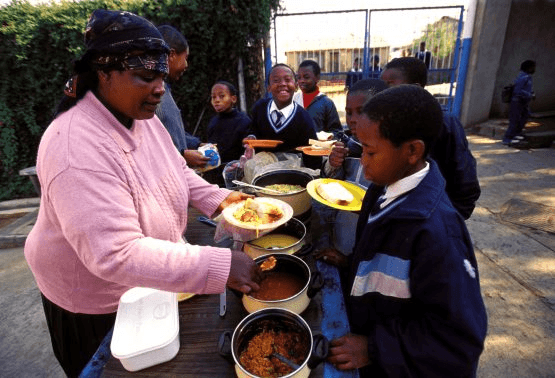
Feeding schemes are initiatives aimed at providing nutritious meals to learners, especially those in low-income communities. These programs are often part of broader government policies, such as the National School Nutrition Programme (NSNP) in South Africa, which aims to improve learners’ ability to focus in class by ensuring they receive adequate nutrition.
Key Features of School Feeding Schemes:
- Free Meals: These meals are free of charge for qualifying students.
- Nutritional Value: The meals are designed to meet the basic dietary needs of growing children.
- Accessibility: Feeding schemes are available in many public schools across the country.
Who Qualifies for Free School Meals?
Free school meals are typically available to students who meet certain criteria, such as:
- Enrolled in a Public School: Feeding schemes are often implemented in government schools, especially those serving underprivileged communities.
- Low-Income Families: Priority is given to children from families with limited financial resources.
- Social Grants Beneficiaries: Many children receiving Child Support Grants automatically qualify.
If you’re unsure whether your child qualifies, speak to the school principal or administration office for clarification.
ALSO READ: How to Obtain a Free Hearing Aid from a Government Hospital
Benefits of School Feeding Schemes
- Improved Concentration and Academic Performance
A hungry child struggles to focus. By providing nutritious meals, feeding schemes enhance learners’ ability to concentrate and excel in their studies. - Reduced Dropout Rates
Many children leave school due to poverty and hunger. Free meals help keep learners in school by alleviating one of the major barriers to attendance. - Healthier Communities
These programs reduce malnutrition, which contributes to better physical and mental health outcomes. - Economic Relief for Families
Parents and caregivers benefit from reduced household food costs, freeing up resources for other necessities.
How to Check if Your Child’s School Is Included in the Feeding Scheme
This is one of the most important steps for parents and guardians.
1. Ask the School Directly
Speak to:
- the school principal,
- class teacher,
- school administration office,
- or School Governing Body (SGB).
Ask:
- whether the school is officially part of the NSNP,
- how meals are distributed,
- and whether all learners qualify automatically.
2. Contact the District Education Office
District offices can confirm whether a school is officially registered under the programme.
3. Check Provincial Department of Education Information
Some provincial DBEs publish NSNP information and school support details online or through district communication channels.
4. Report Problems Immediately
Parents should report:
- food shortages,
- missed meal days,
- spoiled food,
- unsafe food handling,
- or schools failing to serve meals despite being part of the programme.
Tips for Parents and Caregivers
- Keep Communication Open
Stay in regular contact with the school to stay informed about feeding schemes and other support programs. - Encourage Your Child to Participate
If your child feels hesitant or shy about joining the feeding scheme, reassure them that it is there to support their health and education. - Stay Informed
Some feeding schemes offer additional benefits, such as breakfast or after-school snacks. Ask the school about any updates to the program.
Provincial Education Department Contact Information
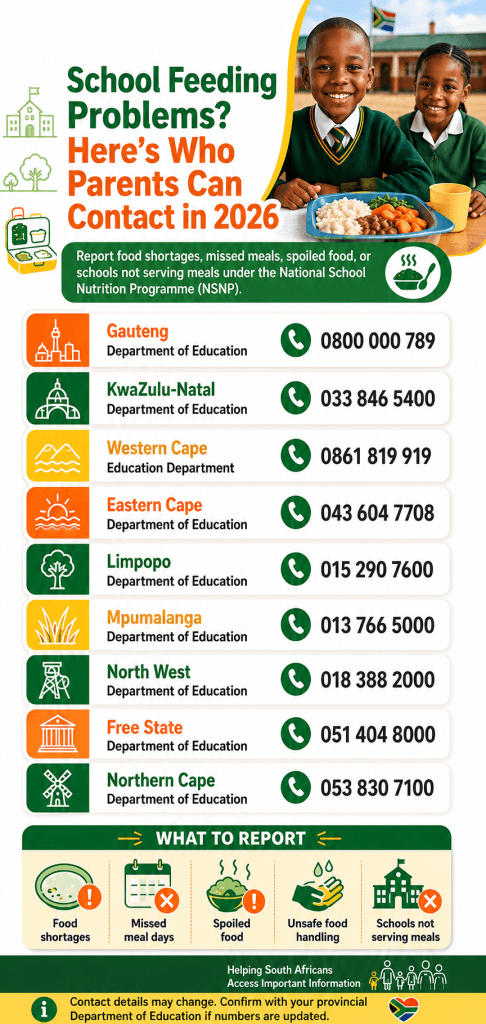
Parents can contact provincial education departments to report NSNP-related problems.
Gauteng Department of Education
- Tel: 0800 000 789
KwaZulu-Natal Department of Education
- Tel: 033 846 5400
Western Cape Education Department
- Tel: 0861 819 919
Eastern Cape Department of Education
- Tel: 043 604 7708
Limpopo Department of Education
- Tel: 015 290 7600
Mpumalanga Department of Education
- Tel: 013 766 5000
North West Department of Education
- Tel: 018 388 2000
Free State Department of Education
- Tel: 051 404 8000
Northern Cape Department of Education
- Tel: 053 830 7100
Parents can also escalate complaints through:
- district offices,
- ward councillors,
- SGBs,
- or provincial DBE hotlines.
What School Meals Should Look Like
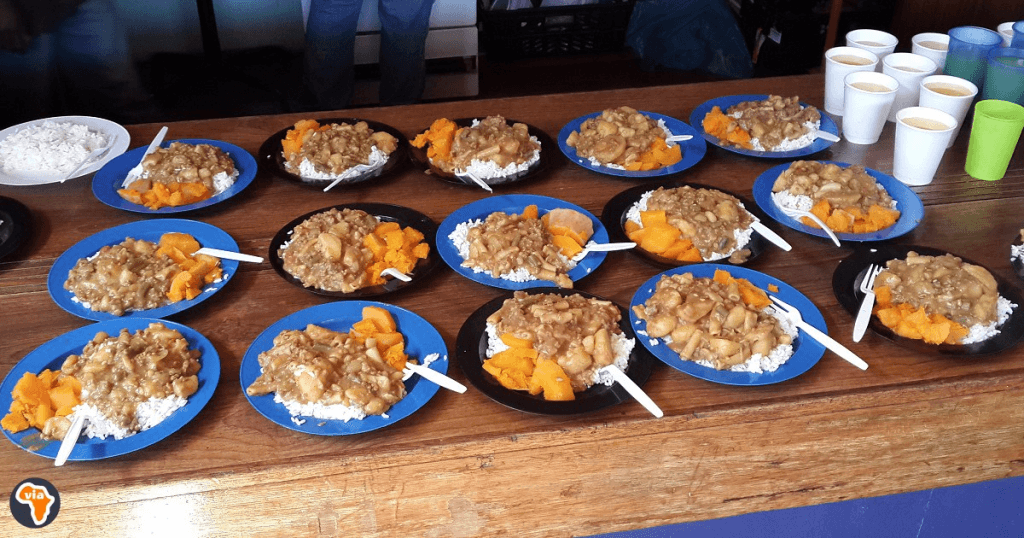
The NSNP is supposed to provide balanced, nutritious meals that support learner health and concentration.
Meals commonly include:
- samp and beans,
- rice and soya mince,
- fortified maize meal porridge,
- vegetables,
- fruit,
- milk in some provinces,
- and protein-based meals where funding allows.
Minimum Standards Parents Should Expect
Meals should:
- be served regularly,
- be prepared safely,
- contain enough nutritional value,
- and follow DBE nutrition guidelines.
Parents should know:
- learners should not repeatedly receive only bread,
- spoiled or rotten food should never be served,
- drinking water and hygiene standards should be maintained,
- and food portions should be reasonably adequate.
If poor-quality meals are repeatedly served, parents should report the issue immediately.
Feeding Schemes and Their Broader Impact
Feeding schemes do more than provide food; they are a lifeline for many communities. By addressing hunger and malnutrition, these programs contribute to:
- Social Development: Healthy children are better equipped to contribute to their communities.
- Economic Growth: Well-nourished learners have better chances of succeeding academically and professionally.
- Equality in Education: Feeding schemes help level the playing field for disadvantaged learners.
Check: 2025 Education Crisis: Budget Cuts Threaten Teachers’ Jobs and Quality Learning
Frequently Asked Questions (FAQs)
Are feeding schemes only for primary schools?
No, feeding schemes are available in many high schools too, especially those in underprivileged areas.
What happens during school holidays?
Some feeding schemes, such as community kitchens, operate during holidays. Check with your local municipality for details.
Can children with dietary restrictions participate?
Yes, schools often accommodate special dietary needs. Inform the school about your child’s restrictions during the application process.
Are there any costs involved?
No, school feeding schemes are free for qualifying students.
ALSO READ: Step-by-Step Guide to Applying for a School Vendor Permit in South Africa
Applying for free meals through feeding schemes can significantly improve your child’s well-being and academic success. These programs ensure that no child has to learn on an empty stomach, offering a brighter future for South Africa’s youth. By taking the steps outlined above, parents and caregivers can secure this vital support for their children.